
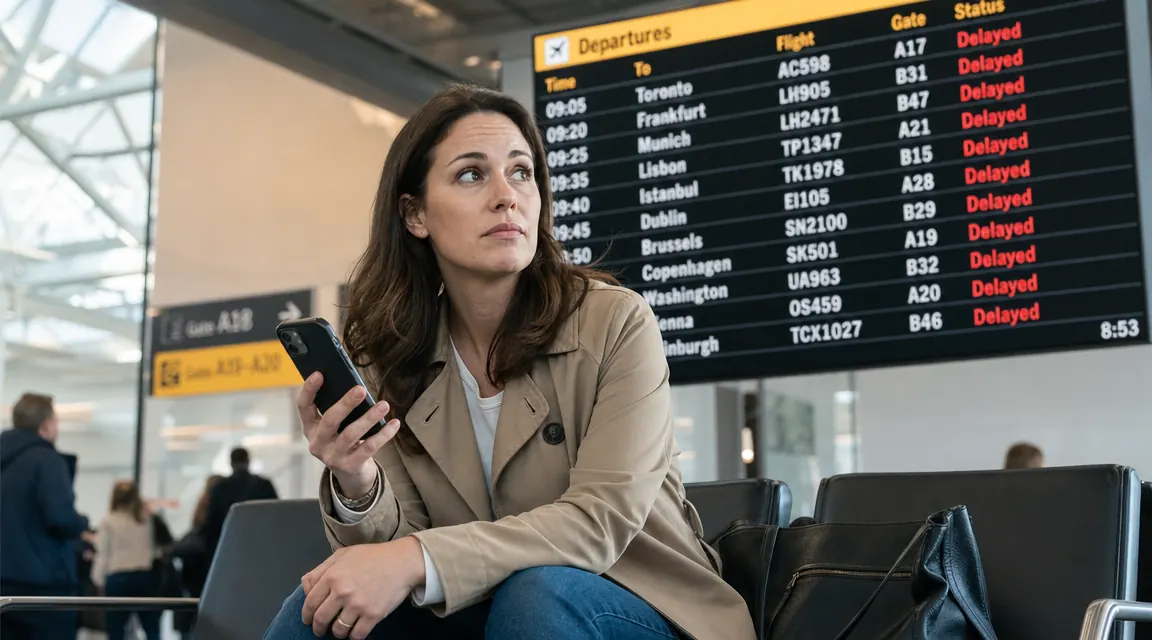
I almost missed my flight home from a work trip because of a power bank I did not bring. The fix, it turned out, was a small one: an INIU 45W portable charger I now never fly without.
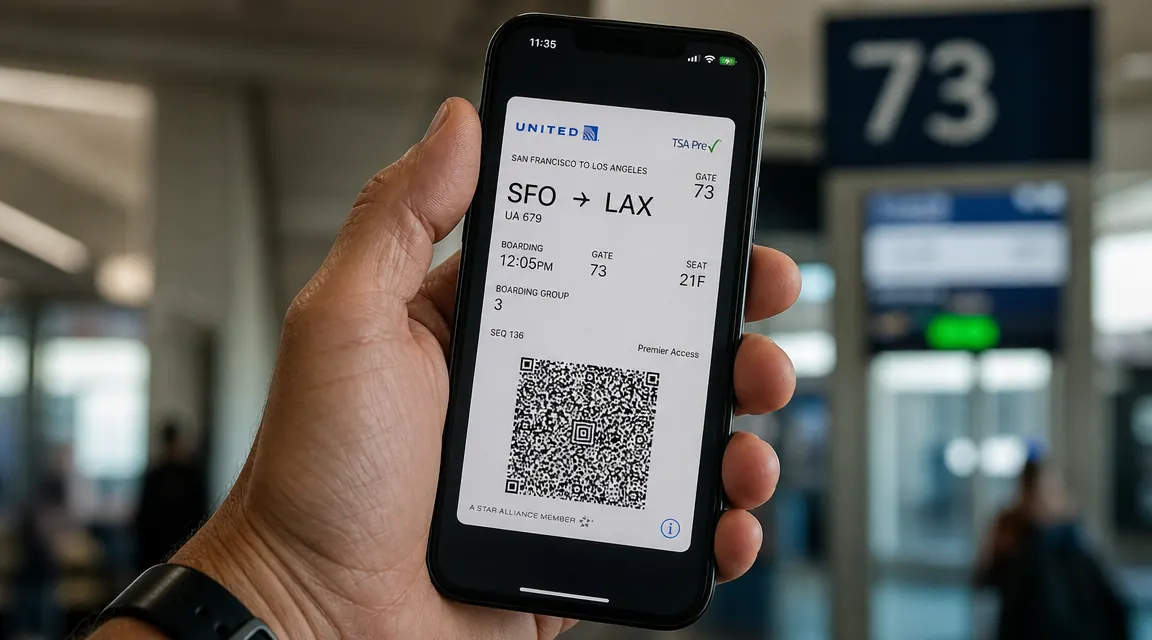
It was a Tuesday in March at O'Hare. I had a 6:15 p.m. connection to Portland and a phone sitting at 8% battery. The delay board had just flipped from 'On Time' to 'Delayed: 10:22 p.m.' Four hours. My boarding pass was digital. My Uber home was pre-scheduled. My hotel confirmation for the next leg of the trip lived in my email. All of it was on that phone. And somewhere in my bag was the power bank I bought two years ago that I stopped trusting after it failed to charge anything faster than a trickle on a transatlantic flight.
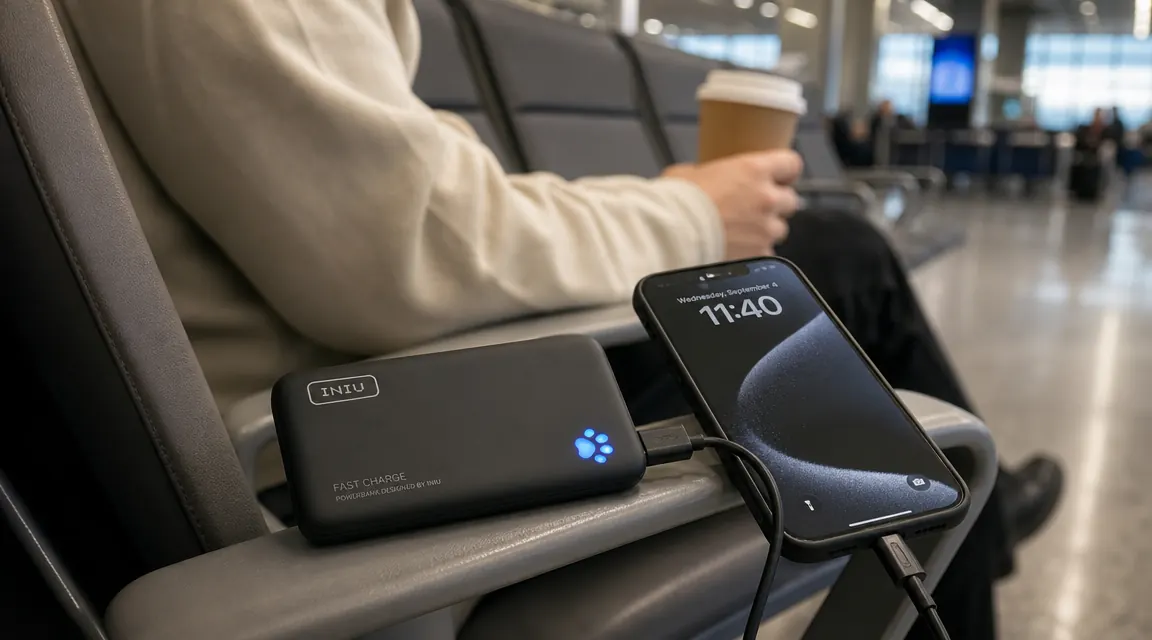
I found one outlet near the gate. A man in a blue blazer got there first. I watched him settle in and pull out a 15-inch laptop. He was not going anywhere. I started doing what every stranded traveler eventually does: wandering the terminal looking at charging stations, calculating whether I could get to a Starbucks, wondering if I should ask the gate agent if there was a 'priority charging outlet' that did not exist.
That was the last time I traveled without the INIU 45W portable charger.
A colleague had recommended it to me three weeks earlier. She travels carry-on only for every trip, which means she is ruthless about what earns bag space. She described it as the first power bank she had used that was both small enough to not bother her and fast enough to actually matter. I had nodded and not ordered it. I was regretting that now, standing at a kiosk in Terminal 1 buying an overpriced bag of cashews and a phone charging cable I did not need.
She described it as the first power bank that was both small enough to not bother her and fast enough to actually matter. I had not ordered it. I was regretting that now.
I made it through that night. My phone died twice. I borrowed the gate agent's charger for 11 minutes, which got me to 22% and was enough to board. But the whole experience felt avoidable in the way that only gear failures feel avoidable, which is the worst kind.
I ordered the INIU the night I landed in Portland.
Your next delay is coming. Here's the charger that handles it.
The INIU 45W portable charger has a built-in cable, charges a dead iPhone to full in about an hour and a half, and fits in a jacket pocket. It has over 80,000 Amazon ratings and currently ships free.
Amazon Check Today's Price on Amazon →I have taken it on eleven trips since then. Three domestic legs with delays, two transatlantic flights, one six-hour connection in Dallas, and a few weekend trips where it mostly lived in my sling bag without getting used. Here is what I know from that use that I did not know from the spec sheet.
The thing that makes it practical in a way most power banks are not is the built-in cable. It tucks into the side of the unit and locks in place. This sounds minor until you are at a gate and your bag is in the overhead and you just need to top off your phone without digging through a cable pouch. You pull out one thing. You plug it in. That is the whole transaction. I have had power banks with better specs that I used less often because the friction of finding a cable made me leave them in the bag.
The 45W output is real in the way that marketing numbers often are not. I charged my iPhone 15 Pro from 12% to 100% in about 95 minutes on a flight from Chicago to Seattle. My old power bank took closer to three hours for the same result. The difference matters when you have a layover, not a long-haul flight, and you are trying to get as much charge as possible in 45 minutes at the gate.
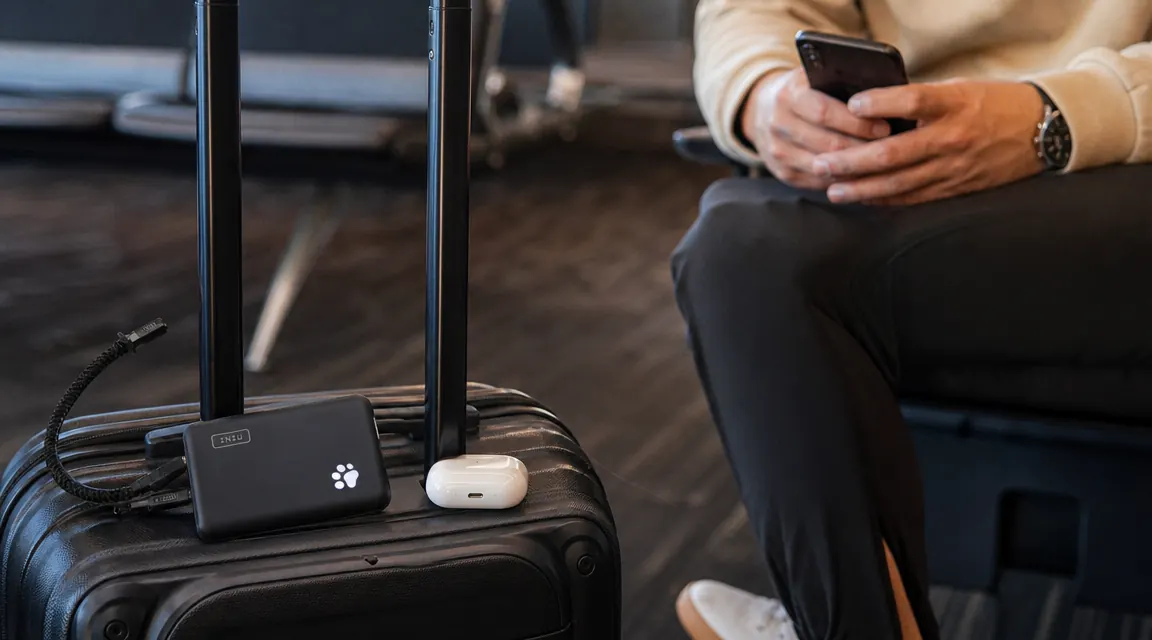
The size is the other thing. INIU describes it as 40% smaller than a standard 10,000mAh battery, and that tracks with how it feels in hand. It is roughly the size of a deck of cards, maybe a little thicker. It goes in a jeans pocket without creating an obvious bulge. For carry-on-only travel, where every cubic centimeter is a negotiation, that matters.
It has two USB-C ports and one USB-A port, so you can charge multiple devices at once if needed. I have used it to simultaneously top off my earbuds case and my phone during a connection, which would have required two separate cables and two separate chargers before.
The honest cons: it does not come with a USB-C wall adapter in the box, which means you need your own to recharge it. And at 10,000mAh, it is not built for multi-day off-grid situations. If you are hiking without power access for three days, this is not your charger. But for airport days, transit days, and the specific misery of a long delay with a dying phone, it is exactly the right tool.
What I'd Tell You If We Were Sitting at My Kitchen Table
Here is the honest version: most power banks fail not because of bad battery cells but because the design makes them inconvenient to actually use. A cable you have to find separately. A size that makes it feel like a punishment to carry. A charge speed so slow it barely moves the needle before your gate opens. Those friction points add up, and people stop bringing the thing they own, which means they end up exactly where I was at O'Hare, doing the dead-phone scramble. The INIU removes those friction points. It is not a luxury item. It is a carry-on essential that costs about the same as a beer and a sandwich at the airport. If you travel with a mobile boarding pass, or your hotel key is on your phone, or you need your phone to navigate an unfamiliar city, you should not be flying without a reliable charger in your bag. This one earns the space. I have not looked at another option since I bought it, and I am not someone who stops looking when things are good enough. I stopped looking because it is better than good enough.
Stop doing the dead-phone scramble at the gate.
The INIU 45W portable charger has 80,000+ Amazon ratings, charges fast enough to matter during a layover, and fits in a jacket pocket. It is the one power bank I bring on every trip.
Amazon Check Today's Price on Amazon →