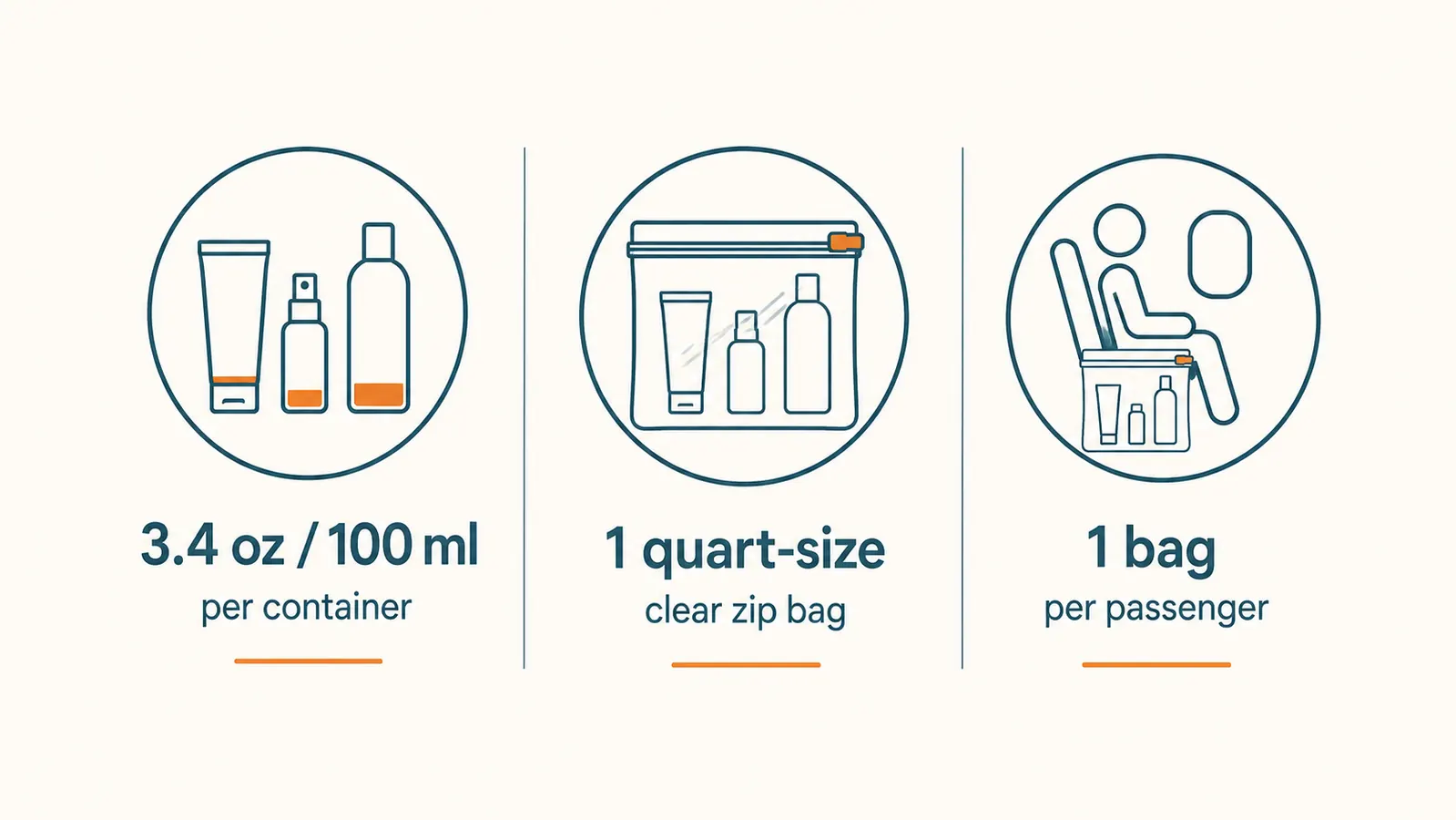
I have missed flights. I have had shampoo confiscated at the checkpoint. I have watched a TSA officer slowly, deliberately, unzip a bag I thought was perfectly packed and pull out a 4-ounce bottle that was 0.6 ounces over the limit. The TSA 3-1-1 liquids rule is not complicated in theory: every liquid in your carry-on must be in a container of 3.4 ounces (100 ml) or less, all containers must fit in a single quart-size clear zip-top bag, and each passenger gets one bag. That is it. Three numbers, one bag. But until you have a system that makes it automatic, you will keep getting surprised at the checkpoint.
The problem is not the rule itself. The problem is that most travelers try to manage it trip by trip, buying travel-size products that run out mid-trip, squeezing full-size bottles into spaces they don't fit, or forgetting to decant something until the night before. After forty-plus flights carry-on only, I stopped improvising. I built a fixed kit with refillable bottles that I prep once, leave assembled between trips, and never think about at the checkpoint again. This guide walks through exactly how I do it, starting with the bottles that made the whole system click.
Stop losing liquids at security. The Gemice travel bottle set is TSA-compliant and inexpensive.
Six refillable bottles in a range of sizes, BPA-free, leak-proof caps, and all under the 3.4 oz / 100 ml limit. The kit I use on every flight.
Amazon Check Today's Price on Amazon →Step 1: Learn the Exact Rule So You Stop Guessing
The TSA 3-1-1 rule has three parts, and each one matters. First, every liquid container in your carry-on must hold 3.4 ounces or 100 milliliters or less. This is the container capacity, not the amount of liquid inside. A 4-ounce bottle that is three-quarters empty still fails the rule, because TSA officers check the bottle label, not the fill level. If your bottle does not have a label or you cannot read the original label, you are in the officer's hands.
Second, all your compliant containers must fit together in a single quart-size, clear, zip-top plastic bag. The standard quart zip bag is approximately 7 by 8 inches. It needs to zip completely closed with everything inside, not bulge open at the top. Third, each passenger gets one bag. Two people traveling together each get their own quart bag, but one person cannot carry two bags worth of liquids through the checkpoint. Medications, baby formula, and breast milk are exempt from the 3-1-1 rule and should be declared to an officer separately.
The rule applies to all liquids, gels, aerosols, creams, and pastes. Shampoo, conditioner, body wash, face wash, moisturizer, sunscreen, toothpaste, lip gloss, perfume, hairspray, and even peanut butter all count. Solid alternatives, such as shampoo bars, solid deodorant, and solid sunscreen, do not count and do not need to go in the quart bag. Knowing exactly what counts, before you pack, prevents the panicked re-sorting at the checkpoint.
Step 2: Choose the Right Refillable Bottles
Buying travel-size products every trip is expensive and wasteful, and it means you are always working with products you did not choose, in sizes that run out at the worst moments. Refillable travel bottles solve both problems: you fill them from full-size products you already own, and the bottles stay in your kit indefinitely. The only decision is which set to use.
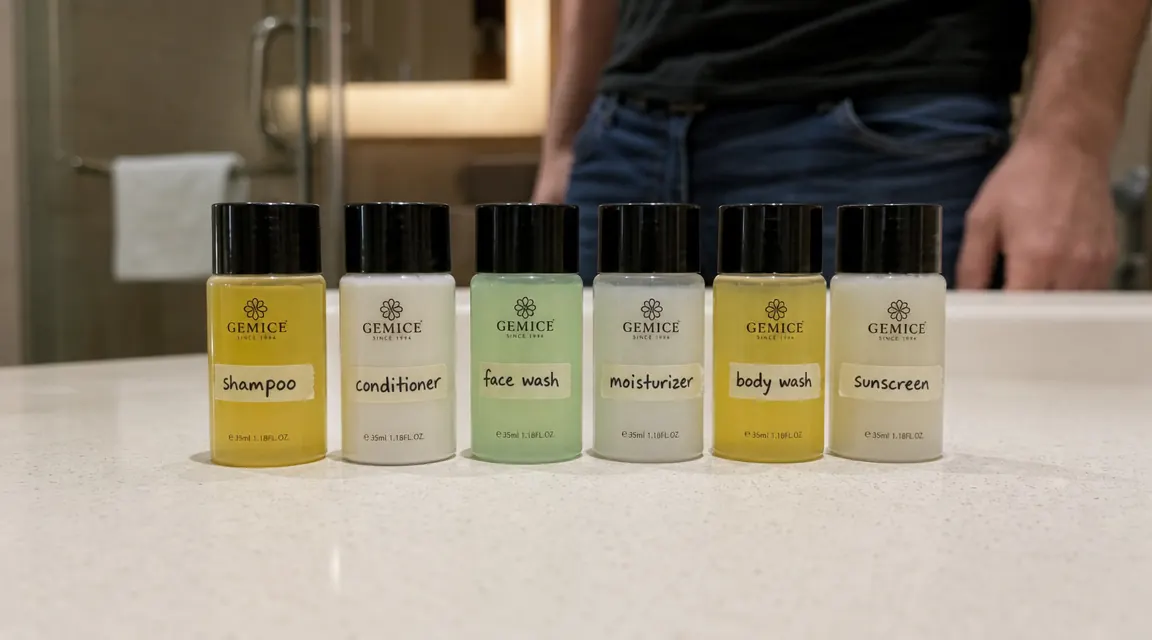
I settled on the Gemice travel bottles after trying two other sets that leaked in my bag. The Gemice set comes with six bottles in different sizes, all BPA-free and clearly labeled with their capacity in ounces and milliliters, so you never guess at compliance. The caps use a flip-top or screw-cap design that has held through checked-bag pressure changes when I have tested them inside checked luggage on other trips, and through the compression of a tightly packed carry-on. At the current price on Amazon, the set costs less than a single bottle of travel-size shampoo at an airport shop.
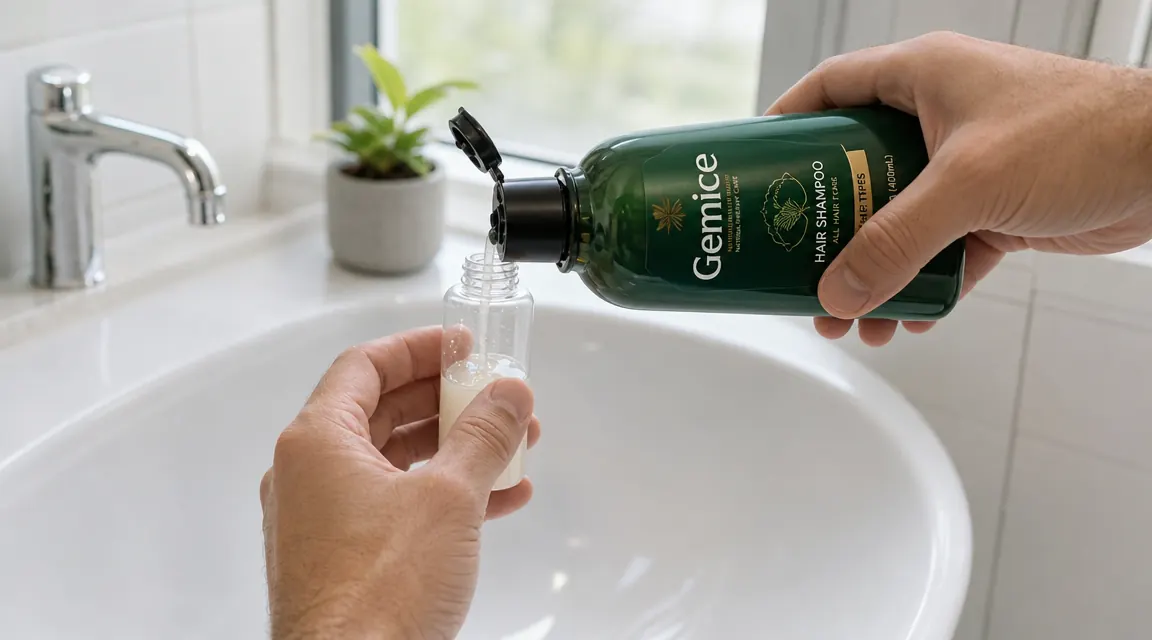
The details that make a difference: the bottles are wide-mouthed enough to fill without a funnel, which matters when you are refilling conditioner at midnight before a 6 a.m. flight. The sizing range in the set lets you allocate more space to the products you use most (shampoo, conditioner) and less to products where a little goes a long way (face wash, spot treatment). And because they are all the same brand and style, they nest together cleanly in the quart bag without wasted space.
Step 3: Build Your Fixed Toiletry Kit
The goal of this step is to stop re-packing from scratch before every trip. You want a quart bag that lives assembled in your travel toiletry kit, pre-filled and ready. Start by listing every liquid product you use in a typical two-to-seven day trip. Be honest about what you actually use versus what you take just in case. Most travelers need: shampoo, conditioner, body wash, face wash, moisturizer, and toothpaste. Some add sunscreen, a serum, or a tinted moisturizer.
Once you have your list, assign each product a Gemice bottle based on how much you use per day. A three-day trip might only need 30 ml of conditioner, but a seven-day trip needs closer to 80 ml, so you use the larger bottle. Fill each bottle from your full-size products at home, label them with a strip of masking tape and a marker (or the bottles' own label panels if they have them), and drop them into a dedicated quart zip bag. Keep that bag with your travel kit, not with your regular bathroom supplies, so it is always separate and always ready.
The final test before you close the bag: every bottle must close completely, and the zip bag must seal flat. If the bag will not close, you have too much. Remove the lowest-priority item or downsize one bottle. A bag that barely closes will stress the zipper and potentially pop open in your bag.
Step 4: Pack the Quart Bag for Fast Security Access
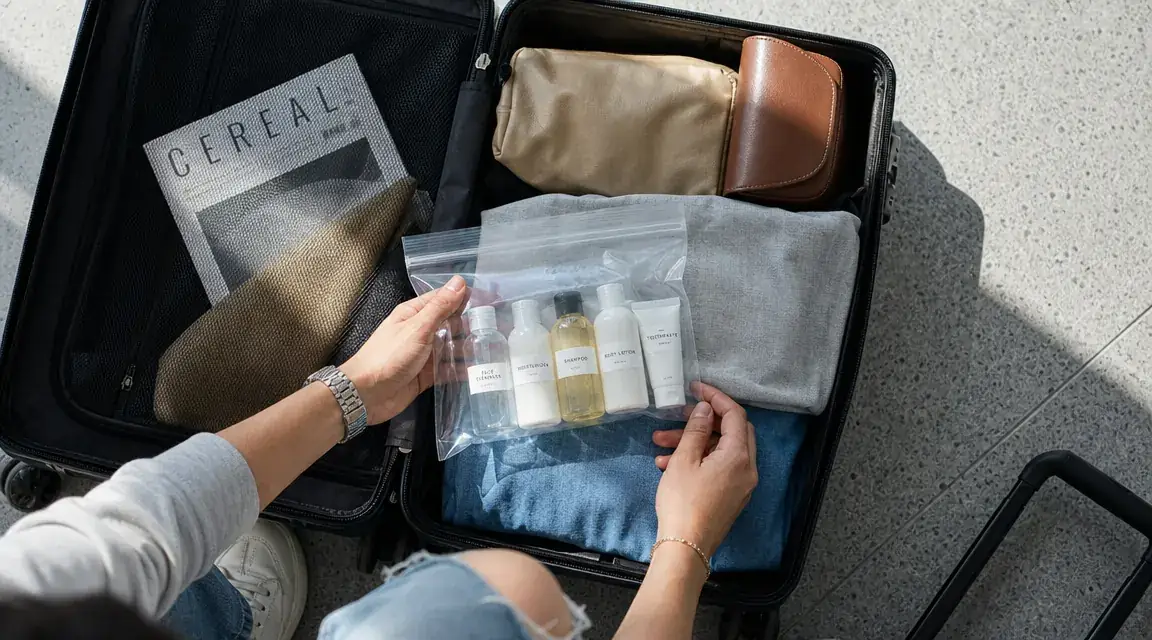
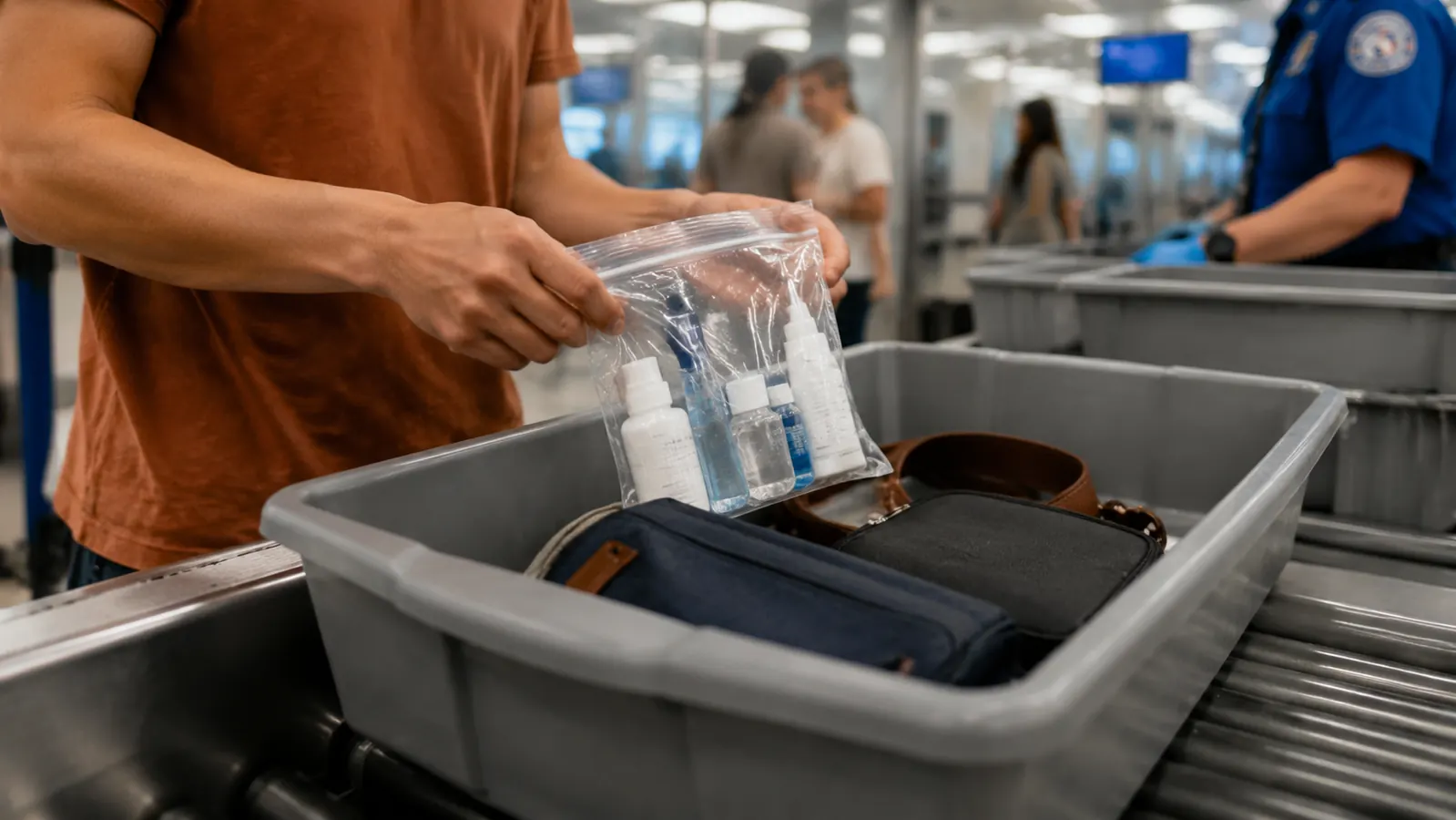
Where you put the quart bag inside your carry-on is almost as important as what is in it. TSA requires the bag to come out of your carry-on and go into the bin separately during the screening process. If it is buried at the bottom under three layers of clothes, you will be that person holding up the line while you dig. Put the quart bag in the outermost pocket of your carry-on or backpack, or at the very top of the main compartment, so you can grab it in one motion when you reach the bin.
If you use a packing cube system for your clothes, keep the toiletry bag completely separate from all packing cubes. It needs to come out alone, not tangled up with your cube for socks. Some travelers use a small mesh or clear pouch as an outer organizer for their toiletry supplies in general, and then drop the quart bag inside that when packing. That works fine as long as the quart bag itself still comes out separately at the checkpoint.
Once I stopped buying travel-size products and started keeping a pre-filled refillable kit, I cleared TSA security without a single re-check for over two years. The system takes twenty minutes to build once and saves a headache on every flight after.
Step 5: Run Through the Security Lane Without Slowing Down
You have built your kit and placed the quart bag where you can reach it. At the checkpoint, the process is straightforward if you have practiced it mentally. Pull your carry-on up to the belt, unzip the outer pocket, and have the quart bag in your hand before you reach the bins. Laptop comes out separately if you are not enrolled in TSA PreCheck. Shoes and belt come off in standard lanes. Everything goes in a single bin in a clear, organized layer, not stacked and piled, because stacked bags slow down the X-ray read.
If an officer flags your bag for a hand check, stay calm and tell them exactly what is in the quart bag. The Gemice bottles are all clearly labeled with their volume in ounces and milliliters, which makes this conversation quick. Officers are looking for containers that exceed 3.4 oz and for items that were not separated from the main bag. If your kit is correctly built, the hand check takes about thirty seconds. If you have TSA PreCheck, the quart bag still needs to be in the carry-on in an accessible spot, but you do not need to remove it from the bag at all.
After you clear security, tuck the quart bag back into its pocket and you are done. At your destination, top off any bottles that are running low before the return trip, and your kit is ready again. No shopping for travel sizes, no re-sorting, no last-minute panic.
What Else Helps
A few smaller habits that make the whole system more reliable: First, audit your quart bag every three to four trips. Caps on refillable bottles wear over time, and a cap that is slightly loose is a cap that will leak into your bag on a bumpy flight. With the Gemice set, I replace the entire set about once a year, which costs less than one full-size product at an airport shop. Second, consider swapping one or two liquid products to solid alternatives permanently. Solid shampoo bars, solid deodorant, and dry shampoo in powder form do not count toward your liquid allowance at all, which frees up quart bag space for products that only come in liquid form, like sunscreen. Third, if you travel internationally, remember that other countries and airports apply their own versions of the 100 ml limit, and the quart bag rule is effectively universal across most international departure airports. The system you build for domestic travel transfers directly.
One thing I specifically do not recommend: relying on hotel toiletries as your backup plan. Some hotels provide them, some do not, and when they do, the products are often low quality or unavailable in your preferred formulas. Building your own kit means you always have exactly what you use, regardless of what the hotel stocks. It also means you can check out early or change hotels mid-trip without having to leave half your toiletries behind.
If you want to go deeper on the review of the Gemice bottles themselves, including how they compare to higher-priced alternatives, the long-term review covers eighteen months of real use across more than thirty flights. And if the broader goal is packing an entire week's worth of supplies in carry-on only, the article on why reusable travel bottles beat buying travel sizes every trip covers the math and the reasoning in detail.
Your pre-filled quart kit starts with the right bottles. The Gemice set is budget-friendly and ships fast.
Six TSA-compliant refillable bottles, all clearly labeled in ounces and milliliters, leak-proof, and sized to fit in a standard quart zip bag with room to spare. This is the set I keep assembled between every trip.
Amazon Check Today's Price on Amazon →